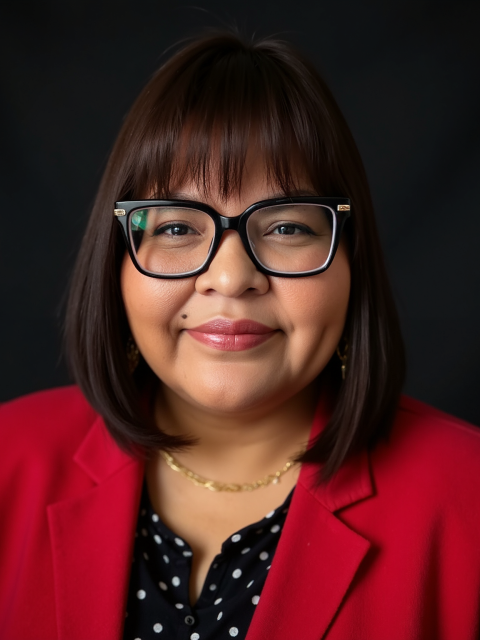
Rosie Digout is a proud member of the Lytton First Nation (Tl’kemtsin) of the Nlaka’pamux people. She makes her home in Lethbridge, Alberta, where she lives and works as a guest on Treaty 7 territory, the traditional homelands of the Blackfoot Confederacy and Métis Region 3. Her work is guided by the teaching of Two-Eyed Seeing, shared by Mi’kmaq Elder Albert Marshall, which encourages her to draw from both Indigenous and Western knowledge systems in ways that honour community, culture, and connection.
Rosie brings nearly two decades of experience working with Indigenous communities and partners across the public, private, nonprofit, and education sectors. Throughout her career, she has supported initiatives that strengthen education-to-employment pathways, workforce inclusion, digital access, and culturally grounded organizational strategies. Across these diverse roles, she has seen that real change happens when people sit together, listen with intention, and approach collaboration with honesty and care.
Her partnership style is grounded in relationships rather than transactions. She takes time to listen before advising, ensuring that conversations begin with understanding rather than assumptions. Rosie works alongside organizations to co-create approaches that reflect their context, community responsibilities, and long-term goals. Instead of offering prescriptive solutions, she supports teams in building readiness at a pace that is respectful, meaningful, and sustainable.
At Indigenous Works, Rosie supports employers who are beginning or deepening their Indigenous inclusion journey. Her focus is to ensure that employers and partners feel supported, informed, and connected as they work toward building workplaces that are welcoming to Indigenous peoples and grounded in meaningful action.
Beyond her professional commitments, Rosie finds balance by spending time on the land and learning through community. She enjoys being with her family and her two daughters, who remind her of the responsibility to help create a future where Indigenous children see themselves reflected in every space they choose to enter.